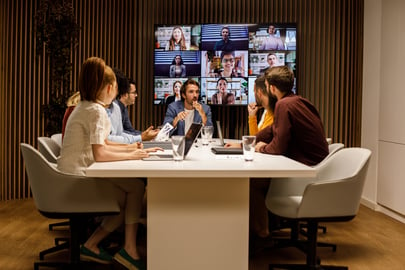

Managing meeting room technology has become more complex as work spreads across multiple offices and locations. Reliable, easy-to-use rooms are part of an impactful workplace experience, helping people connect and collaborate without unnecessary friction.
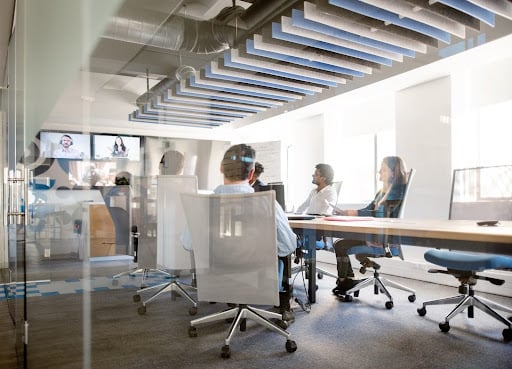
Meeting room monitoring helps keep workplace technology working reliably. That means reducing downtime and, crucially, supporting seamless collaboration across hybrid and remote workplaces.
What is managed services monitoring?
Managed services monitoring, also known as managed monitoring, involves proactive oversight of technology systems to keep them primed and ready to go. For meeting rooms, this service covers continuous monitoring and the ongoing management of major collaboration platforms including Microsoft Teams, Cisco, and Zoom.
The goal is to create a more consistent meeting experience, with faster detection and resolution of issues, less unexpected downtime, and clearer visibility of overall room performance.
Why is managed monitoring important for meeting rooms?
Managed monitoring can improve meeting room reliability in several ways:
1. Meeting room downtime impacts productivity
Meeting room downtime can significantly impact productivity, especially for hybrid teams who are highly dependent on seamless communication. If remote participants can’t engage with their work because of a technical fault, meetings must be delayed or postponed, and productivity drops.
These disruptions are frustrating, but they can also create additional problems by affecting employee morale and client relationships. Monitoring negates these risks by ensuring meeting rooms are always operational and flagging potential issues long before they impact individuals or teams.
2. Monitoring prevents issues before a meeting
AI-enabled monitoring and connected service data can help support teams keep rooms meeting-ready across all of their office locations.
When monitoring flags an issue, support teams can investigate and, where possible, resolve it before it affects meeting room performance, or is even noticed by staff. This is particularly valuable for organizations managing multiple offices or accommodating remote participants working in different time zones.
How does managed monitoring work in meeting rooms?
1. Real-time room device monitoring
Managed monitoring gives teams real-time visibility across connected meeting room equipment, including AV systems and network connectivity. Teams can monitor rooms across locations, giving global organizations a more consistent view of performance.
2. Remote troubleshooting reduces disruption
Technical issues can still arise, but real-time diagnostics help support teams investigate them immediately. It also allows teams to address many problems remotely, reducing the need for site visits and speeding up resolution.
Remote troubleshooting becomes especially useful across a distributed meeting room estate, where sending someone to every site may not be practical.
Why do organizations need managed monitoring for meeting rooms?
1. Meeting room monitoring supports hybrid work
Hybrid teams need the meeting experience to work for everyone, whether they are in the room or joining remotely. When room technology is unreliable or difficult to use, people not only lose time, but also confidence in using these systems in future. That can have a serious knock-on effect for businesses trying to stay up to date with the latest technology and processes.
Room monitoring supports seamless communication for both physical and digital employees by helping to keep meeting rooms ready to use. This consistency helps hybrid teams collaborate effectively, each and every time.
2. Managed monitoring controls costs and IT workload
Managed monitoring can reduce the day-to-day burden on your in-house IT teams by providing specialist support for maintaining and troubleshooting meeting room technology. Waiting for faults to appear can also lead to more disruption and higher support costs.
Finding issues earlier can reduce disruption, repeat incidents, and avoidable site visits. Performance data also gives you clearer information for service planning and lifecycle management, helping you control costs over time.
3. Managed monitoring scales across locations
As businesses expand, managing meeting rooms across multiple offices becomes increasingly complex. Managed services monitoring gives your IT teams a shared view of room performance and a consistent support model across your estate.
This helps you apply common service levels and processes while still supporting local needs. As technology demands grow, a managed model can add coverage without requiring an equivalent increase in on-site staff.
How to make meeting rooms more reliable with room managed services
Managed monitoring helps keep meeting rooms ready to use by reducing disruption and supporting seamless collaboration. By combining proactive monitoring, responsive support, and performance insight, room managed services can improve reliability throughout the technology lifecycle.
Importantly, monitoring supports a cohesive workplace experience. That means less friction for users and simpler management for IT teams, leading to overall more consistent performance across locations.
To learn how Kinly’s room managed services can support more reliable meeting room operations, contact us today. We bring together people, spaces, technology, and services to help you create seamless workplace experiences in every location.
Frequently asked questions about managed services monitoring:
What is managed services monitoring for meeting rooms?
Managed services monitoring is the proactive oversight of meeting room systems and devices. It gives support teams visibility of performance so they can spot issues earlier and respond more quickly.
What does room managed services include?
It can combine proactive device monitoring, responsive support, incident resolution, preventative maintenance, device management, reporting, and service leadership. The exact scope depends on the service design.
Can managed monitoring support Microsoft Teams, Cisco Webex, and Zoom rooms?
Yes, it can support rooms that leverage leading collaboration platforms. However, coverage depends on the room design, connected devices, and agreed service scope. Compatibility should be confirmed during service design.
How does managed monitoring improve workplace experience?
It helps make rooms more reliable and easier to use, reduces disruption, and gives IT teams clearer visibility across locations. It also reduces risk by identifying issues earlier and supporting a faster response.

.jpg?width=480&height=270&name=iStock-1397720240%20(2).jpg)