Skype for Business meetings beyond the desktop
It’s been two years since Microsoft re-branded its enterprise unified communications solution from Lync to Skype for Business (S4B).
Read our blog to get the latest visual collaboration stories, insight and inspiration for the modern workplace.
It’s been two years since Microsoft re-branded its enterprise unified communications solution from Lync to Skype for Business (S4B).
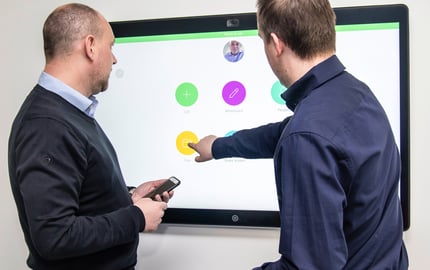
Cisco Spark Board is the latest addition to the company’s collaboration product portfolio. It’s a complete cloud-based collaboration solution for the meeting room. The 3 in 1 device offers a digital whiteboard, high-quality video conferencing and wireless content sharing.
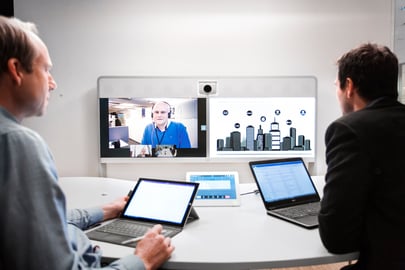
When it comes to video conferencing in the enterprise, an array of video-enabled solutions and platforms already exist. New versions are also becoming available – whether we like it or not we live in a truly multi-vendor environment.
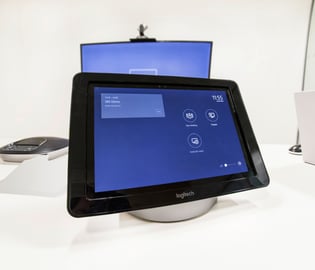
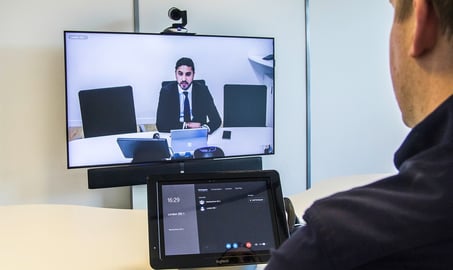
Updated: 21 November 2018 | Originally Posted: October 2016 Back in 2016, Microsoft announced the launch of Skype Room Systems (v1) which were introduced to simplify the meeting room experience using Skype for Business. Skype Room Systems offer organisations the ability to deliver an improved Skype/Teams video experience in meeting rooms at a cost-effective price. But what are Skype Room Systems? What are the options? And what do you need to consider before deploying?
Video conferencing is still a relatively new workplace tool to many businesses, but when it is deployed successfully it brings with it a myriad of benefits to the workplace. However, we’re finding that usage and adoption varies greatly from organisation to organisation and that despite the best of intentions, some businesses are struggling to capitalise fully from the benefits of video collaboration.
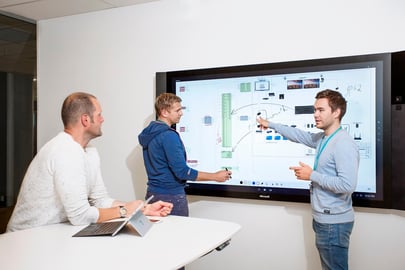
Microsoft has a long history of developing new ways for people to interact with technology and offering innovative collaborative tools that continuously transforms the way we work. From the introduction of Internet Explorer in the mid-nineties and Microsoft Messenger in the early 2000s, to recent acquisitions and established tools such as Exchange, SharePoint, Yammer and Skype. Their latest addition to the Surface family is the Microsoft Surface Hub, which promises to transform team collaboration in the enterprise.
The past decade has seen dramatic technological advances, allowing the workplace to grow more connected, global, collaborative and flexible. Today, businesses operate smarter and the exponential growth of mobile devices, have led us to rethink the physical environment and how we collaborate in the workplace.